
Netaji Subhas Chandra Bose: The Unyielding Flame of India’s Freedom Struggle
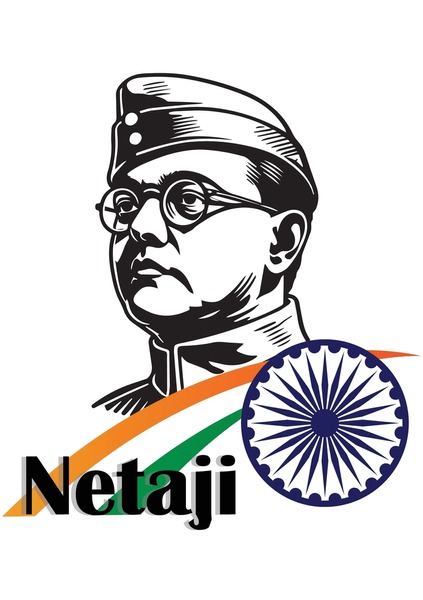
Subhas Chandra Bose, popularly remembered as Netaji, stands among the most charismatic and uncompromising leaders of India’s freedom movement. While many leaders pursued independence through constitutional methods and non-violent resistance, Bose embodied a more radical, action-oriented nationalism. His life was marked by courage, sacrifice, and an unshakeable belief that freedom was not to be begged for, but seized through determination and discipline.
Born on 23 January 1897 in Cuttack, Odisha, Subhas Chandra Bose was a brilliant student from an early age. He excelled academically and went on to study in England, where he cleared the prestigious Indian Civil Services (ICS) examination in 1920. However, at the peak of a promising career under the British administration, Bose made a historic decision—he resigned from the ICS, declaring that he could not serve a government that enslaved his own people. This act symbolized the beginning of a life devoted entirely to India’s liberation.
Bose soon emerged as a powerful leader within the Indian National Congress. Influenced by leaders like Chittaranjan Das, he combined intellectual depth with organizational skill. He was elected President of the Congress twice, in 1938 and 1939, reflecting his growing popularity, especially among the youth. However, ideological differences—particularly over the pace and method of achieving independence—led to his eventual break with the Congress leadership.
Unlike many contemporaries, Bose believed that British imperialism would not leave India voluntarily. He argued that global political upheavals, especially during the Second World War, provided India with a historic opportunity to strike for freedom. Escaping British surveillance in a daring and dramatic manner, Bose traveled across continents to seek international support for India’s cause.
His most significant contribution came through the formation and leadership of the Indian National Army (INA), also known as the Azad Hind Fauj. With the stirring call, “Give me blood, and I will give you freedom,” Bose inspired thousands of Indian soldiers and expatriates in Southeast Asia to take up arms against British rule. Under his leadership, the INA fought alongside Japanese forces and established the Provisional Government of Free India (Azad Hind Sarkar), giving Indians a powerful symbol of an alternative national authority.
Netaji was not only a military leader but also a visionary thinker. He emphasized discipline, unity, secularism, and gender equality—evident in the formation of the Rani of Jhansi Regiment, an all-women combat unit. His slogan “Jai Hind” continues to echo in India’s collective consciousness as a timeless expression of patriotism.
The circumstances surrounding Subhas Chandra Bose’s disappearance in August 1945 remain one of the most enduring mysteries of modern Indian history. Whether he died in a plane crash or survived in secrecy continues to be debated. Yet, beyond the mystery, his legacy is unquestionable.
Subhas Chandra Bose represents the spirit of fearless resistance and national pride. He reminded Indians that freedom demands sacrifice and courage, and that national dignity must never be compromised. In remembering Netaji, India remembers a leader who dared to dream of complete independence and was willing to give everything to turn that dream into reality.
[M K Sr. AI PROJECT MANAGER]