JAMMU AND KASHMIR,HISTORY AND CULTURE
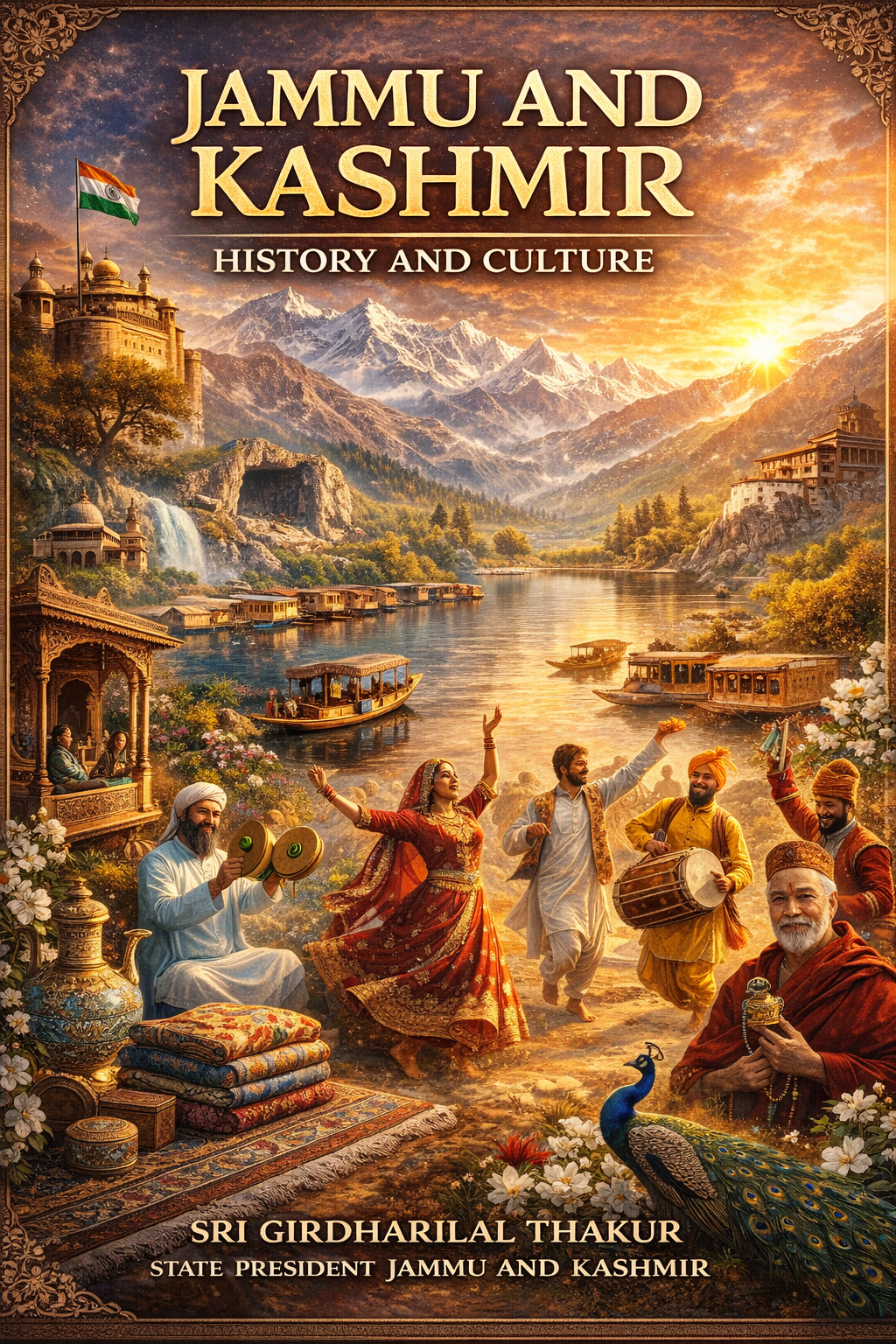
Jammu and Kashmir is an integral part of India known for its natural beauty, cultural diversity and strategic importance. Before independence in 1947, it was a princely state ruled by Maharaja Hari Singh. For many years, it had a special status under Article 370 of the Indian Constitution which granted it limited autonomy in certain matters. In August 2019, the Government of India abrogated Article 370 and reorganized the state into two Union Territories—Jammu and Kashmir and Ladakh. Jammu and Kashmir reflects India’s unity in diversity. Jammu is known for its temples and Hindu traditions, Kashmir Valley for its rich Islamic heritage and the region also has Sikh and Buddhist communities. Languages such as Kashmiri, Dogri, Urdu and Hindi are widely spoken. The culture of Jammu and Kashmir is a beautiful blend of traditions, art, music and festivals. Folk dances, traditional songs and festivals such as Diwali, Eid, Baisakhi and Navreh are celebrated with enthusiasm. The region is famous for handicrafts like Pashmina shawls, carpets, wood carving and papier-mâché which are valued across India and the world. From a biological and anthropological perspective, the people of Jammu and Kashmir show diversity in physical features due to geography and climate. The population includes different ethnic and racial groups influenced by Central Asian, Indo-Aryan and Tibetan regions. Adaptation to cold climates, mountainous terrain and high altitudes reflects human biological variation making the region an important example of India’s human diversity. Despite challenges, Jammu and Kashmir remains a symbol of India’s sovereignty, diversity and democratic values.
SRI GIRDHARILAL THAKUR
STATE PRESIDENT
JAMMU AND KASHMIR