
Homi Jehangir Bhabha: Remembering the Architect of India’s Nuclear Destiny
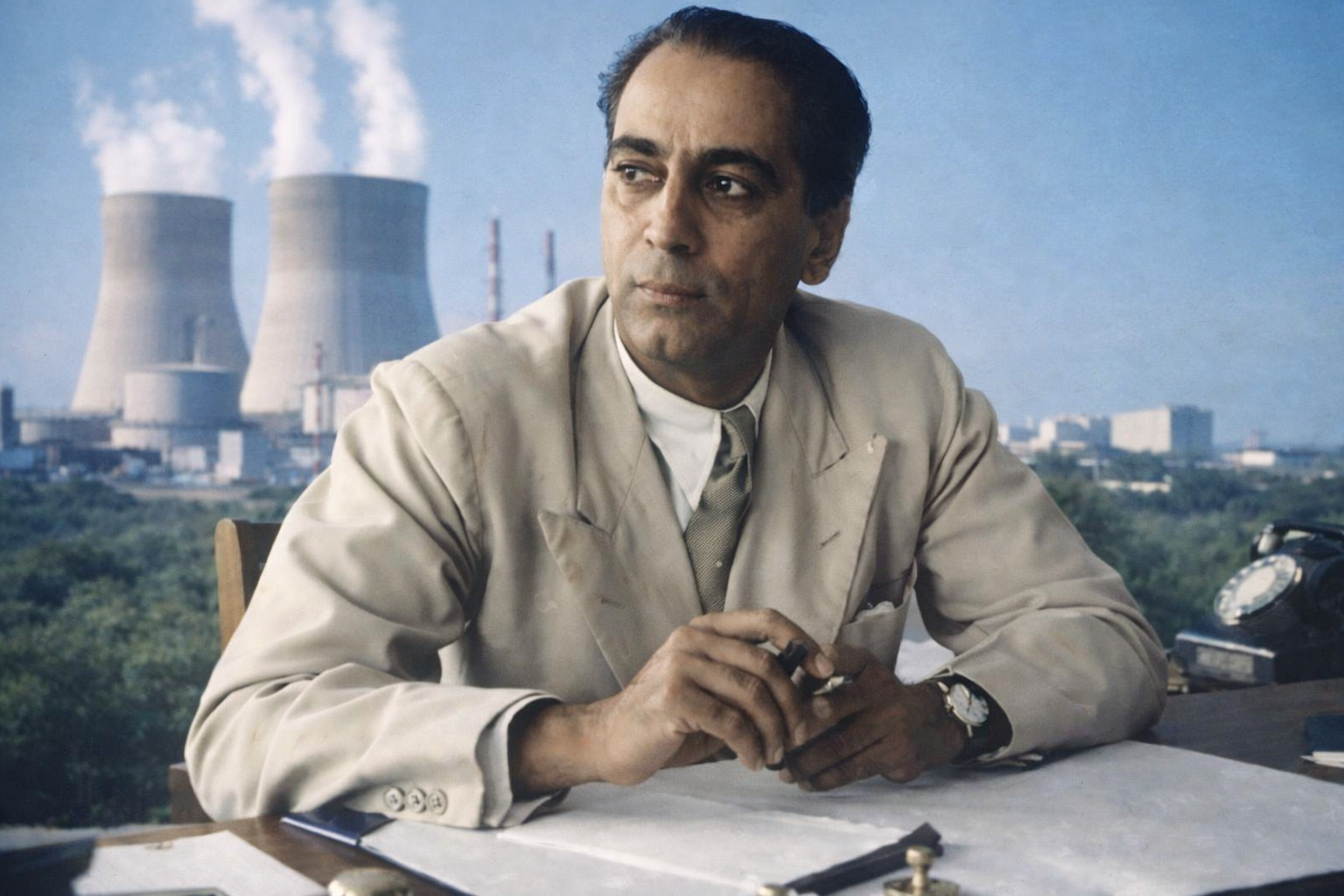
As Dr. Homi Jehangir Bhabha once observed, “A country which does not develop its science and technology cannot be a truly independent nation.” On his death anniversary, these words echo with renewed meaning. His life stands as a powerful reminder that nations rise not merely on resources, but on vision, courage, and an unwavering commitment to knowledge.
Every year, on 24 January, India remembers Dr. Homi Jehangir Bhabha, one of the nation’s greatest scientists and visionaries, whose untimely death in 1966 cut short a life devoted to building a strong, self-reliant, and scientifically empowered India. Though decades have passed since his tragic demise, Bhabha’s ideas, institutions, and scientific legacy continue to shape India’s progress.
A Brilliant Mind with a National Vision
Born on 30 October 1909 into a distinguished Parsi family, Homi J. Bhabha displayed exceptional intellectual talent from an early age. Educated at Cambridge University, he made significant contributions to theoretical physics, particularly in quantum mechanics and cosmic ray research. The Bhabha Scattering phenomenon remains a fundamental concept in particle physics.
Yet, Bhabha was not content with academic excellence alone. As India approached independence, he envisioned a nation where science and technology would be the backbone of development, not a luxury dependent on foreign powers.
Founder of India’s Atomic Energy Programme
Dr. Bhabha is rightly known as the Father of India’s Nuclear Programme. In 1945, he founded the Tata Institute of Fundamental Research (TIFR), which became a cradle for advanced scientific research in India. Later, as the first Chairman of the Atomic Energy Commission of India, he laid the foundations of the country’s atomic energy infrastructure.
At a time when newly independent India faced poverty, illiteracy, and technological backwardness, Bhabha boldly advocated for peaceful use of nuclear energy to meet the nation’s future needs in power, medicine, agriculture, and research. His foresight ensured that India would not lag behind in critical strategic technologies.
A Scientist Beyond the Laboratory
Bhabha was a rare blend of scientist, institution-builder, administrator, and artist. Deeply interested in music, painting, and architecture, he believed that scientific temper must coexist with cultural refinement. His role in establishing institutions like BARC (Bhabha Atomic Research Centre) transformed India into a serious global player in nuclear science.
He also represented India on international scientific platforms, fearlessly asserting that developing nations had the right to advanced scientific knowledge.
A Tragic End, An Immortal Legacy
On 24 January 1966, Dr. Bhabha died in a mysterious air crash near Mont Blanc while traveling to attend an international conference on atomic energy. His sudden death shocked the nation and the scientific community worldwide. India lost not just a scientist, but a guiding force at a critical juncture of its technological journey.
Yet, his dream did not perish with him. The institutions he built, the scientists he mentored, and the vision he articulated continue to drive India’s nuclear, space, and scientific achievements.
Why Bhabha Matters Today
In an era where nations compete on innovation, energy security, and strategic autonomy, Bhabha’s philosophy is more relevant than ever. He firmly believed that scientific self-reliance was essential for true independence, a principle that continues to guide India’s policies in science and technology.
Conclusion
On his death anniversary, remembering Dr. Homi Jehangir Bhabha is not merely an act of homage—it is a reaffirmation of faith in science as a tool for national progress.
[M K Sr AI PROJECT MANAGER]